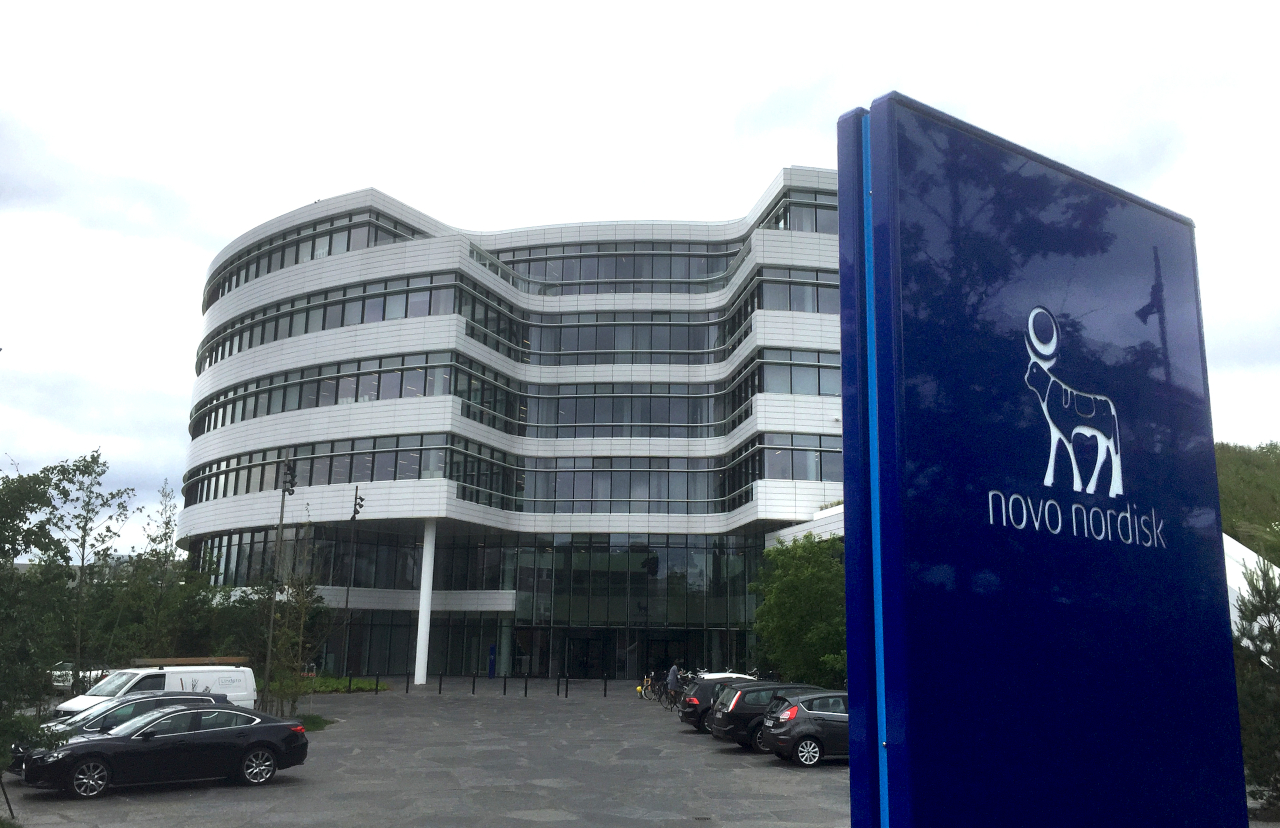
Novo Nordisk has announced a strategic partnership with OpenAI, adding a new layer to the company’s broader artificial intelligence strategy.
This is not Novo Nordisk’s first visible move into AI. The company has already used generative AI in a more structured regulatory setting through NovoScribe, a platform designed to help produce clinical study reports and other regulatory-grade documents in a tightly controlled environment.
The new OpenAI partnership points to a broader expansion.
Rather than focusing only on a narrow, rules-based workflow, this move suggests Novo Nordisk is looking at how generative AI can support knowledge work across a larger part of the organization. That could include research support, internal knowledge access, drafting assistance, and productivity gains in areas where people spend large amounts of time working across complex information.
That shift matters.
In highly regulated industries, AI usually gains traction first in environments where the process is repeatable, the inputs are structured, and the quality checks are already clear. Regulatory documentation fits that model well. It makes sense as an early use case because the boundaries are easier to define and the risk of drift is easier to monitor.
A broader partnership with OpenAI suggests the company may now be exploring where AI can help beyond those more tightly controlled processes.
That does not mean replacing expertise or removing human oversight. If anything, it highlights the opposite. The more powerful the system, the more important governance becomes. In a setting like pharma, useful AI adoption depends on clear policies for privacy, review, accountability, and acceptable use.
This is where the contrast between Novo Nordisk’s earlier AI work and this new partnership becomes especially interesting.
The earlier project showed how AI can succeed in a process with well-defined rules and reliable guardrails. The OpenAI partnership suggests the company now wants to apply AI more broadly, while still operating within the control structure that a global healthcare company requires.
From a data and AI perspective, that's the real story.
This is not just about using a new tool. It's about organizational maturity. Companies tend to move into broader AI adoption only after they have seen where automation works, where human review remains essential, and what kind of governance needs to be in place before scaling further.
Novo Nordisk appears to be moving from targeted AI use toward a more integrated AI strategy.
For people working in data, analytics, and AI, that makes this worth watching. It offers a real-world example of how a large healthcare company may move from focused automation in one high-structure area to wider AI deployment across the enterprise.
Why this matters
For analytics professionals, this announcement stands out for three reasons:
Final Thoughts
Novo Nordisk’s new OpenAI partnership is worth paying attention to not only because of the companies involved, but because of what it may signal about the company’s next phase of AI adoption.
The earlier regulatory documentation work showed what AI can do in a tightly controlled environment. This new partnership suggests Novo Nordisk may now be extending that thinking into a wider set of business and knowledge workflows.
That makes it a useful case study for anyone interested in applied AI, enterprise governance, and how large organizations scale AI beyond isolated pilot projects.
OpenAI Partnership Sources
Novo Nordisk Press Release
Fierce Pharma Coverage
NovoScribe Sources
MongoDB Case Study: From 12 Weeks to 10 Minutes
AWS Case Study: A faster way to bring enterprise data to generative AI
Video: How Novo Nordisk Accelerates Time To Value with GenAI and MongoDB
Video: Novo Nordisk’s AI Revolution: Anthropic, MongoDB & AWS in Pharma
A first-of-its-kind AI lab from Lilly and NVIDIA aims to create continuous, data-driven systems that accelerate drug discovery.
NVIDIA and Eli Lilly have announced a first-of-its-kind AI co-innovation lab aimed at rebuilding the drug discovery process from the ground up. The two companies will invest up to $1 billion over five years to bring together advanced AI modeling, large-scale data generation, robotics and automated agentic wet-lab systems.
The lab will operate in the San Francisco Bay Area, where Lilly researchers and NVIDIA AI engineers will work side by side to create continuous learning systems that link real-world experiments with computational models. The goal is to accelerate identification, optimization and validation of potential medicines, with NVIDIA’s BioNeMo platform and next-generation architectures such as Vera Rubin at the core of the effort.
The collaboration builds on Lilly’s existing AI supercomputer and expands opportunities to use AI across clinical development, manufacturing and supply chain reliability. Both companies view this as a blueprint for the next era of drug discovery: rapid experimentation, scalable data generation and AI models custom-built to support scientific decision making.
Why This Matters for Data Analysts
The Lilly–NVIDIA collaboration shows how quickly AI-assisted workflows are becoming central to scientific work. Several themes are directly relevant to analysts who work with automation and model-driven processes:
These developments point to a future where analysts work with AI systems that ingest data, refine models and prepare the next set of actions automatically, while human judgment guides direction and interprets results.
Novo Nordisk has expanded its collaboration with Valo Health, committing $190 million in near-term payments and up to $4.6 billion in potential milestone payments to accelerate the discovery and development of treatments for obesity, type 2 diabetes, and cardiovascular diseases. The expanded agreement, building on their 2023 partnership, increases the number of programs from 11 to 20, increasing their focus on cardiometabolic innovation.
Novo Nordisk leaders have expressed their enthusiasm for the partnership in LinkedIn posts. Marcus Schindler, Novo Nordisk’s Executive Vice President and Chief Scientific Officer, highlighted the strong scientific synergies and high engagement between the teams, emphasizing how leveraging human datasets early in the R&D process is driving scientific excellence. Similarly, Dave Moore, Executive Vice President of US Operations, celebrated the rapid expansion as a testament to the value created by combining Novo Nordisk’s deep understanding of cardiometabolic diseases with Valo’s AI-powered platform.
At the core of the partnership is Valo’s Opal Computational Platform™, a groundbreaking AI-powered system designed to accelerate drug discovery and development by leveraging high-quality human data. Unlike traditional approaches, which are often hindered by fragmented data and inefficiencies, Opal integrates large-scale human-centric datasets with advanced machine learning models. The platform continuously learns and improves by generating and integrating new data during every stage of drug development. It also incorporates proprietary Biowire technology to produce human-relevant tissue in the lab, enabling precise simulations of drug responses before clinical trials. This end-to-end approach minimizes data loss, accelerates insights, and aims to produce more effective treatments that reach patients faster.
This initiative underscores Novo Nordisk's strategic investment in AI and reinforces its commitment to combating chronic diseases. As the two companies expand their partnership, the focus remains on achieving groundbreaking advancements in cardiometabolic treatments.
For more information, please visit Fierce Biotech.

Left to right: Jensen Huang, founder and CEO of NVIDIA | Nadia Carlsten, CEO of DCAI | HM King Frederik X of Denmark
Source: Novo Nordisk Foundation
Denmark has ushered in a new era of artificial intelligence with the launch of its first AI supercomputer, Gefion. This groundbreaking system, developed on the NVIDIA DGX SuperPOD platform, was ceremonially powered on by NVIDIA’s CEO Jensen Huang and King Frederik X of Denmark, marking a pivotal moment in the nation’s technological advancement.
Gefion, which is operated by the Danish Centre for AI Innovation (DCAI), is designed to solve some of the most complex challenges across sectors like biotechnology, quantum computing, and clean energy. Thomas Senderovitz, Senior VP Data Science at Novo Nordisk, wrote in a public LinkedIn post about the event, “Today, the amazing and groundbreaking Gefion supercomputer—the new Danish world-class instrument for generating insights and solving complex problems through artificial intelligence—was turned on by NVIDIA’s CEO and founder Jensen Huang and HM King Frederik. A very special moment to remember for generations to come!”
The supercomputer is part of a larger public-private initiative, funded by the Novo Nordisk Foundation and the Export and Investment Fund of Denmark, and it stands as Denmark’s largest sovereign AI infrastructure. This positions Denmark not only as a leader in AI research and innovation but also enhances the country’s ability to address global challenges, from accelerating drug discovery to improving climate models.
With the Gefion supercomputer, Denmark aims to foster an AI ecosystem that reflects its unique cultural and industrial strengths, while advancing the scientific community's ability to tackle some of the world’s most pressing issues.
For more information about Gefion and DCAI, visit the Danish Centre for AI Innovation.
Page 2 of 2